
How to Pray When You Do Not Know What to Say
Have you ever sat down to pray and discovered that the words simply would not come? You may know that you need God, yet feel too tired, hurt, confused, angry, or overwhelmed to explain what is happening inside you.
Learning how to pray when you do not know what to say is not about finding perfect language. Prayer can begin with one honest sentence, a passage of Scripture, a familiar structure, or even silence. God is not waiting for a polished performance. He invites you to come as you are and bring what is true.
What can you pray when you do not know what to say?
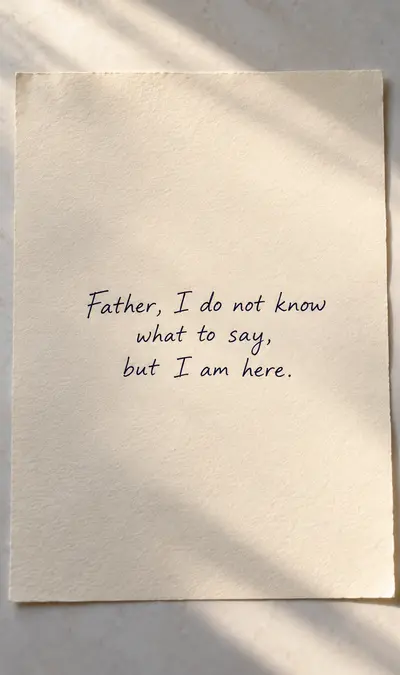
When you do not know what to say, begin with one honest sentence: "Father, I do not have the words, but I am here."
There have been seasons when my life changed faster than I could process it. I could handle practical responsibilities, answer questions, and care for what was directly in front of me, yet have almost no language left when I turned toward God. In those moments, prayer became very simple: "Please stay near. Show me what belongs to today."
That was not a lesser prayer. It was the prayer I actually had. Sometimes honesty is the doorway back into connection with God. You do not have to summarize an entire season before He will listen.
Does prayer have to sound polished?
No. Biblical prayer is honest, relational, and often much less polished than people imagine.
"Trust in him at all times; ye people, pour out your heart before him: God is a refuge for us. Selah." - Psalm 62:8 KJV
Pouring out your heart can include gratitude and worship, but it can also include fear, disappointment, confusion, anger, longing, or grief. God already knows the condition of your heart. Prayer allows you to bring that truth into relationship with Him instead of carrying it alone.
You may speak aloud, write, whisper, repeat one line, or sit quietly. The form can change according to what your body and mind can hold that day. Sincerity matters more than length.
How did Jesus teach us to pray?
Jesus gave His disciples the Lord's Prayer as a pattern that turns our attention toward God, welcomes His will, names daily needs, seeks forgiveness, and asks for protection.
"After this manner therefore pray ye: Our Father which art in heaven, Hallowed be thy name. Thy kingdom come. Thy will be done in earth, as it is in heaven. Give us this day our daily bread. And forgive us our debts, as we forgive our debtors. And lead us not into temptation, but deliver us from evil: For thine is the kingdom, and the power, and the glory, for ever. Amen." - Matthew 6:9-13 KJV
The Lord's Prayer is not a test of memory or a formula you must perform correctly. You can pray it exactly as written, pause after one line, or use each line as a doorway into your own words.
What does the Lord's Prayer give you when words fail?
The Lord's Prayer gives you a steady path to follow when your thoughts feel scattered.
Our Father which art in heaven. Begin with relationship. You are turning toward a Father who is near enough to hear and strong enough to hold what you bring.
Hallowed be thy name. Name who God is before trying to solve the problem. His character is steady even when your circumstances are not.
Thy kingdom come. Thy will be done. Release the demand to control every outcome. Ask for His wisdom, timing, truth, and direction.
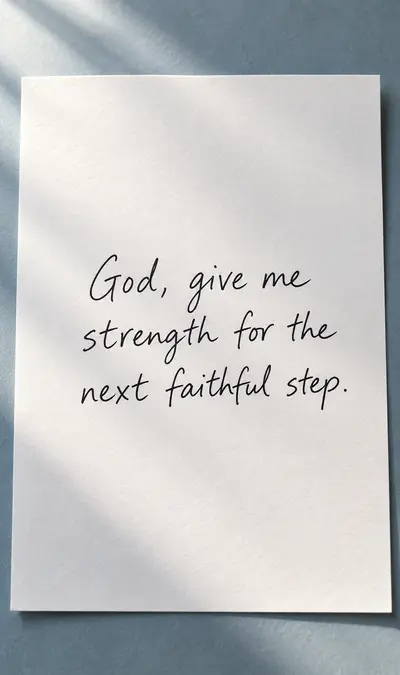
Give us this day our daily bread. Ask for what belongs to today: strength, food, rest, courage, provision, clarity, or the next faithful step.
If beginning the day feels difficult, these morning prayers for today can give you simple language for receiving daily bread one day at a time.
Forgive us our debts. Bring what needs mercy without hiding or punishing yourself. Confession returns you to truth and grace.
Lead us not into temptation, but deliver us from evil. Ask for discernment, boundaries, safety, and protection for yourself and the people you love.
When safety is the need closest to the surface, use these prayers for protection as a starting point for entrusting your home and your people to God.
What is the ACTS prayer structure?
ACTS is a simple prayer structure that stands for adoration, confession, thanksgiving, and supplication. It can help when you want a little guidance without turning prayer into another assignment.
Adoration. Tell God what is true about Him. You might say, "You are faithful," "You are merciful," or "You see what I cannot see."
Confession. Name what needs to be brought into the light. Ask for forgiveness, correction, or help changing direction without spiraling into shame.
Thanksgiving. Notice one gift, provision, person, truth, or small evidence of grace. Gratitude does not deny pain; it allows pain and goodness to exist in the same prayer.
Supplication. Ask for what you and others need. Be specific when you can, and simple when you cannot.
A short ACTS prayer might sound like this: "Father, You are patient and near. Forgive me for trying to control what I cannot carry. Thank You for meeting me here. Please give me wisdom and strength for the next faithful step."
Can you pray just one sentence?
Yes. One honest sentence can be a complete prayer, especially when your energy, concentration, or emotional capacity is limited.
When you are afraid: "God, stay close and show me the next safe step."
When you are tired: "Father, give me what I need for today and permission to release the rest."
When you need wisdom: "Lord, help me recognize what is mine to do and what is mine to release."
When you are grieving: "God, hold what hurts because I cannot make sense of it yet."
When you feel numb: "I do not feel much right now, but I am choosing to turn toward You."
When you are angry: "Father, help me tell the truth without letting anger decide my next step."
When you are grateful: "Thank You for this one good thing in the middle of a complicated day."
When you cannot decide: "Give me enough light for the decision directly in front of me."
If a decision is the place where words keep disappearing, these prayers for guidance can help you ask for clarity without demanding that the whole future become visible at once.
Can Scripture become your prayer?
Yes. When your own words feel unavailable, you can borrow the words of Scripture and turn them back toward God.
Read one verse slowly. Choose a short passage and notice the phrase that feels most important today.
Turn the verse into a response. After reading "Fear thou not; for I am with thee" from Isaiah 41:10, you might pray, "God, I am afraid. Help me trust that You are with me here."
Personalize the request without changing the promise. Psalm 23:1 can become, "Lord, be my shepherd in this decision. Lead me instead of letting fear drive me."
Repeat the line you can hold. You do not need to complete a long study. One true sentence received slowly can be enough for this moment.
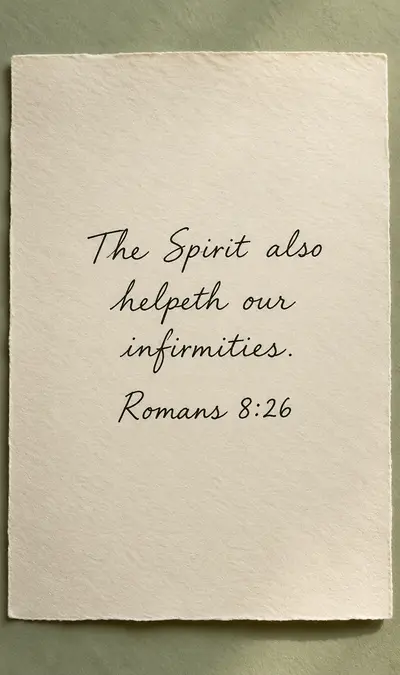
"Likewise the Spirit also helpeth our infirmities: for we know not what we should pray for as we ought: but the Spirit itself maketh intercession for us with groanings which cannot be uttered." - Romans 8:26 KJV
What if silence or tears are all you have?
Silence and tears can still be offered to God. Romans 8:26 says the Spirit helps in the very place where we do not know how to pray as we ought.
You can sit before God without filling every moment. You can breathe normally, let tears come, place your hand over your heart, or repeat a single name: "Jesus." Prayer is not cancelled because language has gone quiet.
For the days when even one sentence feels unreachable, keep a prayer for the day you cannot pray nearby and let its words carry you until your own begin to return.
How can writing help when spoken prayer feels impossible?
Writing can slow your thoughts and give shape to feelings that are difficult to speak aloud.
Start with the date and one sentence: "Today I need..." or "God, this is what is true..." You can copy a verse, write a question, list a few names, or leave blank space. A prayer journal is not a record of spiritual performance. It is simply a place to return, notice, and be honest.
If you want a gentle way to begin, this guide on how to start a prayer journal can help you create a practice that supports connection rather than pressure.
How can you pray for someone you love?
When you are praying for someone you love, ask for God's presence, wisdom, protection, and work in both of your lives without taking responsibility for choices that belong to another person.
You can pray, "Father, I entrust this person to You. Give me wisdom about what love requires from me and what I need to release into Your care." Prayer can express deep love without becoming an attempt to control another person's path.
When concern for grown children is especially heavy, these prayers for your adult children offer language for love, surrender, wisdom, and trust.
What can you pray at the end of a hard day?
At the end of a hard day, name what you are carrying, thank God for one sustaining grace, ask for what remains unresolved, and give yourself permission to rest.
Try this: "Father, You know what today required. Thank You for bringing me this far. I release the conversations, decisions, and people I cannot manage tonight. Guard my mind, give my body rest, and meet me again in the morning."
If your mind continues rehearsing the day, these prayers for sleep can help you place unfinished thoughts into God's care before you rest.
What if prayer still feels hard?
If prayer still feels hard, that does not mean God has rejected you or that your faith has failed.
Stress, grief, trauma, exhaustion, depression, anxiety, illness, and major life change can affect concentration and language. Keep prayer small and honest. Let Scripture, music, a trusted person, or a written prayer support you. Spiritual care can also sit beside counseling, medical care, sleep, nourishment, movement, boundaries, and practical help.
The goal is not to force yourself into a spiritual feeling. The goal is to keep one small opening toward truth, connection, and care.
What is a simple prayer for today?
A simple prayer for today can name God, tell the truth, ask for what you need, and release what you cannot carry.
"Father, I do not know how to say everything that is inside me. Thank You for hearing what I cannot explain. Forgive what needs mercy, steady what feels afraid, and give me the wisdom and strength required for today. Show me the next faithful step, and help me release the rest into Your care. In Jesus' name, amen."
What is your next faithful step?
Your next faithful step may be as small as praying one sentence, copying one verse, resting for ten minutes, or asking a safe person to stand with you.
If you are unsure which part of your life needs care first, take the free quiz. It can help you identify your present gap and one aligned next step.
If you want support taking that step, the First Step Guide is a simple resource designed to help you begin without feeling as though you have to rebuild everything at once.
You do not need perfect words to be heard. Begin with what is true, let God meet you there, and take the next faithful step. Steady, inch by inch.
Elizabeth Jane